Terminal emulator
PyCharm includes an embedded terminal emulator for working with your command-line shell from inside the IDE. Use it to run Git commands, set file permissions, and perform other command-line tasks without switching to a dedicated terminal application.
Enable the Terminal plugin
This functionality relies on the Terminal plugin, which is bundled and enabled in PyCharm by default. If the relevant features aren’t available, make sure that you didn’t disable the plugin.
- Press Control+Alt+S to open the IDE settings and then select Plugins .
- Open the Installed tab, find the Terminal plugin, and select the checkbox next to the plugin name.
Initially, the terminal emulator runs with your default system shell, but it supports many other shells, such as Windows PowerShell, Command Prompt cmd.exe , sh , bash , zsh , csh , and so on. For more information about changing the shell, refer to Terminal settings.
Open the Terminal tool window
- Go to View | Tool Windows | Terminal or press Alt+F12 .
Right-click a project item in the Project tool window and choose Open in terminal from the context menu. This way the terminal will start with the directory corresponding to the selected item.
You can open the terminal as an editor tab: right-click the Terminal tool window header and select Move to Editor .
Start a new local session

- To start a new session in a separate tab, click on the toolbar or press Command T .
To run multiple sessions inside a tab, right-click the tab and select Split Right or Split Down in the context menu.
The Terminal saves tabs and sessions when you close the project or PyCharm. It preserves tab names, the current working directory, and even the shell history.
To close a tab, click on the Terminal toolbar or press Control+F4 .
Press Alt+ArrowRight and Alt+ArrowLeft to switch between active tabs. Alternatively, you can press Alt+ArrowDown to see the list of all terminal tabs.
Configure shortcuts for the terminal actions in the IDE settings ( Control+Alt+S ), under Keymap | Plugins | Terminal .
Start a new SSH session
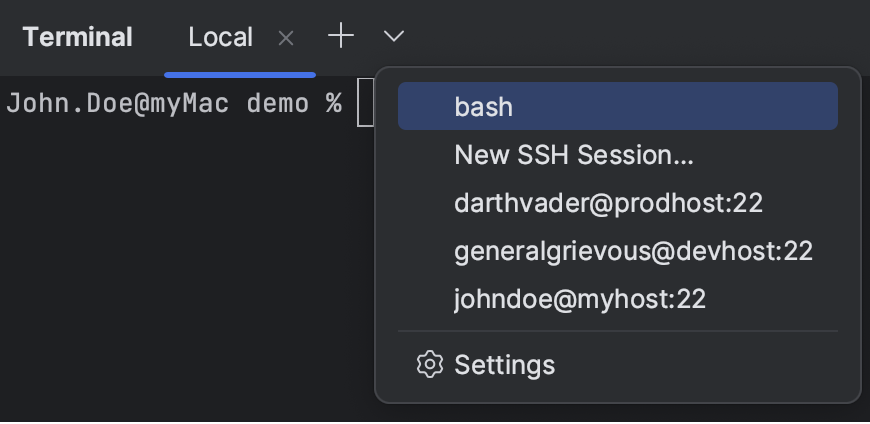
- On the toolbar, click .
- Click New SSH Session , enter the address of a host to which you want to connect, and provide authentication data. Or, if you have configured SSH configurations, you can select one of them from the list.
To terminate the connection, click in the terminal tab.
Rename terminal tab
- Right-click the tab and select Rename Session from the context menu.
Just like with system terminal tabs, you can rename PyCharm Terminal tabs programmatically. For example, use title MyTitle if your interpreter is Windows Command Prompt or echo -en «\033]0;MyTitle\a» for bash and zsh. This feature is available if the Show application title checkbox is selected in Advanced Settings.
Search in terminal
- To search for a certain string in a Terminal session, press Control+F . This searches all text in the session: the prompt, commands, and output.
By default, the search is not case-sensitive. You can click Match case in the search field to make it case-sensitive.
Configure the terminal emulator
- Press Control+Alt+S to open the IDE settings and then select Tools | Terminal . For more information, refer to Terminal settings.
For advanced settings, select Advanced Settings and scroll down to the Terminal group. For more information, refer to Advanced Settings: Terminal.
Terminal settings
Use this page to customize the settings of the embedded terminal emulator.
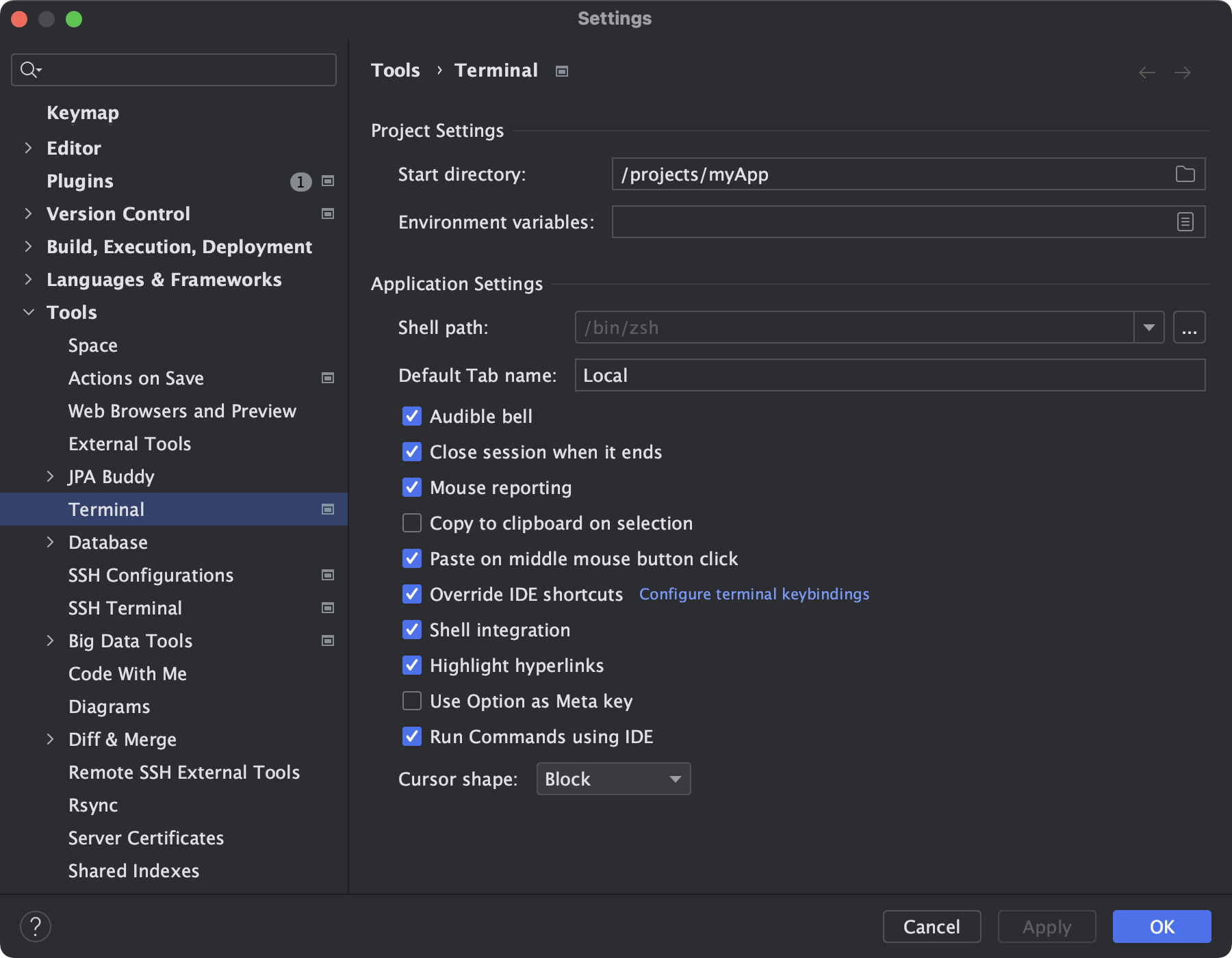
For the less frequently used settings, refer to Advanced Settings: Terminal.
Enable the Terminal plugin
This functionality relies on the Terminal plugin, which is bundled and enabled in PyCharm by default. If the relevant features aren’t available, make sure that you didn’t disable the plugin.
- Press Control+Alt+S to open the IDE settings and then select Plugins .
- Open the Installed tab, find the Terminal plugin, and select the checkbox next to the plugin name.
Project Settings
These settings affect the terminal only for the current project:
Specify the working directory where every new shell session should start. By default, it starts in the root directory of the current project.
Specify custom environment variables for every new shell session.
Application Settings
These settings affect the terminal in any project that you open with the current PyCharm instance:
Specify the shell that will run by default. PyCharm should automatically detect the default shell based on your environment. Here are some examples of different shells:
- Bash: /bin/bash
- Z shell: /bin/zsh
- Bash for Windows: bash.exe
- WSL: wsl.exe
- PowerShell: powershell
- Command Prompt: cmd.exe
- Cygwin: «C:\cygwin\bin\bash.exe» —login -i
Specify the default name for new tabs.
Play the bell sound on various events.
Close session when it ends
Close the current session when the corresponding process ends (for example, by kill ).
Enable the mouse pointer support in the embedded local terminal.
Copy to clipboard on selection
Copy text selected in the terminal to the clipboard.
Paste on middle mouse button click
Paste clipboard contents by clicking the middle mouse button.
Override IDE shortcuts
Use shell-specific shortcuts instead of IDE shortcuts when the Terminal tool window is active.
Click Configure terminal keybindings to open the Keymap settings page and configure the shortcuts that are available in the Terminal tool window under Plugins | Terminal . For example, Switch Focus to Editor is mapped to Escape by default, which means that if you don’t override the IDE shortcuts, Escape will switch focus from the terminal to the editor.
Integrate the terminal with the system shell to properly keep track of your command history for sessions and load a custom config file with required environment variables.
Shell integration works for sh , bash , zsh , and fish shells.
Highlight HTTP links in the terminal and make them clickable.
Use Option as Meta key
On macOS, use the Option key as the Meta key.
Run Commands using IDE
Detect and highlight commands that can be used as IDE features instead of running them in the terminal and reading console output.
When enabled, instead of pressing Enter , which runs the command in the terminal, press Control+Enter to open the corresponding GUI element.
Select the shape of the cursor: block, underline, or vertical.
This option is available only if you have the Python plugin installed.
For the Python interpreter being a virtual environment, with this checkbox selected, the virtual environment is automatically activated ( activate is performed automatically).
The embedded terminal emulator also inherits the following IDE settings:
- On the Keymap settings page, you can configure the copy Control+C and paste Control+V shortcuts.
- On the Editor | General | Appearance page, you can configure blinking frequency for the caret. The Terminal does not inherit the Use block caret option because there is a separate option for that: Cursor shape.
- On the Editor | Color Scheme | Console Font page, you can configure line spacing and fonts.
- On the Editor | Color Scheme | Console Colors page, you can configure font colors.
- On the Editor | Color Scheme | General page, you can configure the selection foreground and background colors.
Terminal
WebStorm includes an embedded terminal emulator for working with your command-line shell from inside the IDE. Use it to run Git commands, set file permissions, and perform other command-line tasks without switching to a dedicated terminal application.
Enable the Terminal plugin
This functionality relies on the Terminal plugin, which is bundled and enabled in WebStorm by default. If the relevant features aren’t available, make sure that you didn’t disable the plugin.
- Press Control+Alt+S to open the IDE settings and then select Plugins .
- Open the Installed tab, find the Terminal plugin, and select the checkbox next to the plugin name.
Initially, the terminal emulator runs with your default system shell, but it supports many other shells, such as Windows PowerShell, Command Prompt cmd.exe , sh , bash , zsh , csh , and so on. For more information about changing the shell, refer to Terminal settings.
Open the Terminal tool window
- Go to View | Tool Windows | Terminal or press Alt+F12 . By default, the terminal emulator runs with the current directory set to the root directory of the current project. For more information about changing the default start directory, refer to Terminal settings.
- Right-click any file (for example, in the Project tool window or any open editor tab) and select Open in Terminal to open the Terminal tool window with a new session in the directory of that file.
You can open the terminal as an editor tab: right-click the Terminal tool window header and select Move to Editor .
Start a new local session
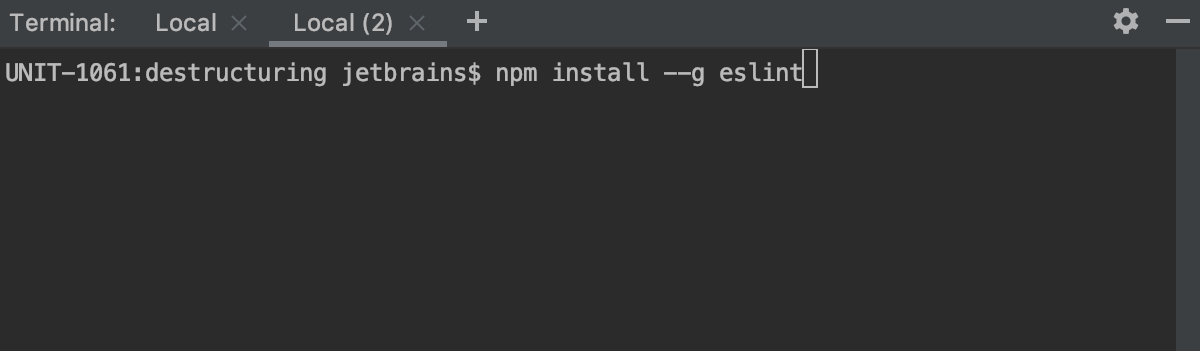
- To start a new session in a separate tab, click on the toolbar or press Command T .
To run multiple sessions inside a tab, right-click the tab and select Split Right or Split Down in the context menu.
The Terminal saves tabs and sessions when you close the project or WebStorm. It preserves tab names, the current working directory, and even the shell history.
To close a tab, click on the Terminal toolbar or press Control+F4 .
Press Alt+ArrowRight and Alt+ArrowLeft to switch between active tabs. Alternatively, you can press Alt+ArrowDown to see the list of all terminal tabs.
Configure shortcuts for the terminal actions in the IDE settings ( Control+Alt+S ), under Keymap | Plugins | Terminal .
Start a new SSH session
- On the toolbar, click .
- Click New SSH Session , enter the address of a host to which you want to connect, and provide authentication data. Or, if you have configured SSH configurations, you can select one of them from the list.
To terminate the connection, click in the terminal tab.
Rename terminal tab
- Right-click the tab and select Rename Session from the context menu.
Just like with system terminal tabs, you can rename WebStorm Terminal tabs programmatically. For example, use title MyTitle if your interpreter is Windows Command Prompt or echo -en «\033]0;MyTitle\a» for bash and zsh. This feature is available if the Show application title checkbox is selected in Advanced Settings.
Search in terminal
- To search for a certain string in a Terminal session, press Control+F . This searches all text in the session: the prompt, commands, and output.
By default, the search is not case-sensitive. You can click Match case in the search field to make it case-sensitive.
Configure the terminal emulator
- Press Control+Alt+S to open the IDE settings and then select Tools | Terminal . For more information, refer to Terminal settings.
For advanced settings, select Advanced Settings and scroll down to the Terminal group. For more information, refer to Advanced Settings: Terminal.
Run IDE features from the terminal
Instead of running a specific command in the integrated terminal and reading console output, you can use the relevant IDE feature, like a tool window or a dialog that implements this functionality. For example, you can launch an npm, yarn, gulp, or grunt command from the Terminal tool window and view its output in the Run or Debug tool window.
Run a command in the Run or Debug tool window from the terminal
- Type a command ( npm run serve ) in the terminal and notice how it is highlighted.
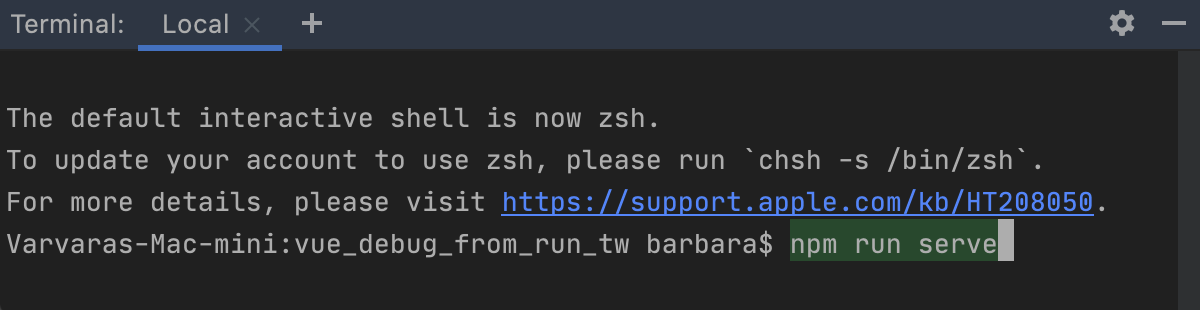
- Instead of pressing Enter , which runs the command in the terminal, press Control+Enter to open the corresponding GUI element. In this example, it will open the Run tool window with the output of the npm serve command.
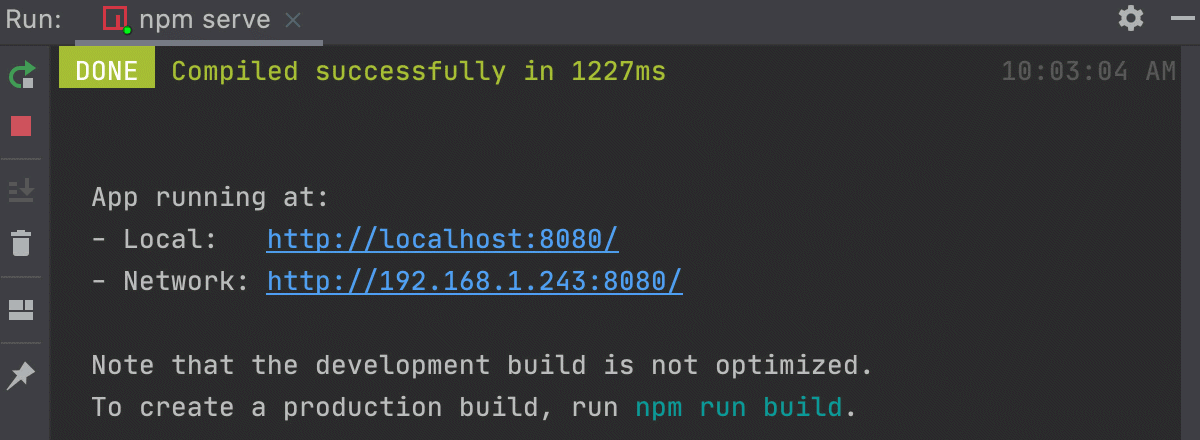 To run the command in the Debug tool window, press Control+Shift+Enter .
You can run most of the commands recognized by Run Anything in the Run or Debug tool window.
Run a WebStorm command from the Run Anything popup
- Open the Run Anything popup by pressing Control twice.
- Start typing a command, for example, npm run serve .
- Select the command from the list and press Control+Enter to show its output in the Run tool window or Shift+Enter to show the output in the Debug tool window.
Disable running WebStorm commands from the Terminal
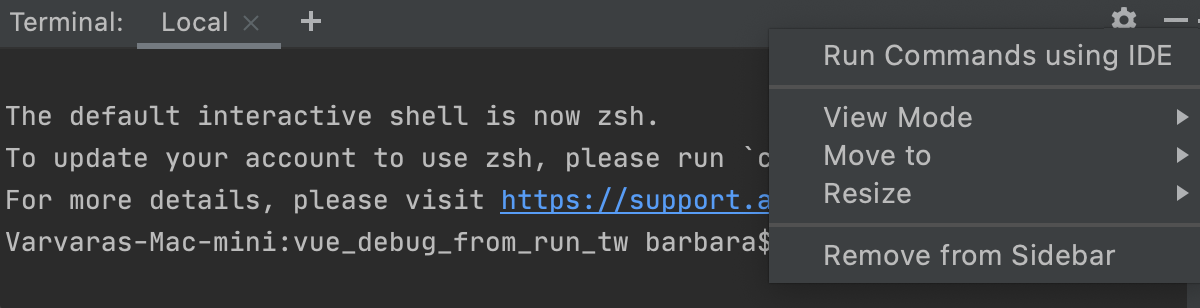
- Click on the title bar of the Terminal tool window and clear the Run Commands using IDE option.
- Alternatively, open the Settings dialog ( Control+Alt+S ), go to Tools | Terminal , and clear the Run Commands using IDE checkbox.
Python. Как очистить консоль?
Нужно чтобы было выведено число 5. А через 3 секунды экран очистился.
Как это сделать?
Голосование за лучший ответ
import os
os.system(‘clear’)
Александр МокануУченик (220) 3 года назад

Black Afgano Просветленный (22229) Александр Мокану, если у вас Windows, то команда os.system(‘cls’)
Похожие вопросы
Ваш браузер устарел
Мы постоянно добавляем новый функционал в основной интерфейс проекта. К сожалению, старые браузеры не в состоянии качественно работать с современными программными продуктами. Для корректной работы используйте последние версии браузеров Chrome, Mozilla Firefox, Opera, Microsoft Edge или установите браузер Atom.