Your access to this site has been limited by the site owner
If you think you have been blocked in error, contact the owner of this site for assistance.
If you are a WordPress user with administrative privileges on this site, please enter your email address in the box below and click «Send». You will then receive an email that helps you regain access.
Block Technical Data
| Block Reason: | Access from your area has been temporarily limited for security reasons. |
|---|---|
| Time: | Fri, 8 Dec 2023 11:14:28 GMT |
About Wordfence
Wordfence is a security plugin installed on over 4 million WordPress sites. The owner of this site is using Wordfence to manage access to their site.
You can also read the documentation to learn about Wordfence’s blocking tools, or visit wordfence.com to learn more about Wordfence.
Click here to learn more: Documentation
Generated by Wordfence at Fri, 8 Dec 2023 11:14:28 GMT.
Your computer’s time: .
Ноутбук DELL Vostro 5468. Вылетает ошибка alert tpm device is not detected
Ноутбук DELL Vostro 5468. При загрузке постоянно вылетает ошибка alert tpm device is not detected. В сети советы в основном по Bios — сбросить, прошить и так далее. Обновлять BOIS пробовал, откатывать на более раннюю версию тоже пробовал, батарею отключал, Windows переустанавливал — толку 0. Ошибка продолжает вылетать. В настройках BIOS способа отключить её тоже нету (по крайне мере не нашел).
Какие ещё можно предпринять варианты?
94731 / 64177 / 26122
Регистрация: 12.04.2006
Сообщений: 116,782
Ответы с готовыми решениями:
Dell Vostro 5468 перестал разгоняться проц
Добрый вечер, Ситуация такая: Запускаю ФШ, параллельно работал бразуер с видео. Вдруг загрузка.
Dell vostro 14 5468 — перезагрузка вместо выключения
Ноутбук при выключении через несколько секунд сам запускается, в режим сна тоже не входит, все.
Ноутбук Dell Vostro 15 3568
Здравствуйте. Хочу продать свой ноут 2017 года. В 2017 он стоил $590. Dell Vostro 15 3568 .
Не полностью выключается ноутбук (Dell Vostro 5470)
После достаточно длительной работы на ноуте, он ИНОГДА не полностью выключается. А именно: кнопка.
Установка Windows 7 на ноутбук Dell Vostro 15 вместо Ubuntu 16.4
Здравствуйте. На новом ноутбуке Dell Vostro 15 3568 установлена Ubuntu. Я хочу установить Windows.
How to Fix TPM Device is not Detected?
The error message “Alert! TPM device is not detected” appears when you are trying to boot up your Dell laptop. TPM or Trusted Platform Module is a chip that is essentially used for carrying out cryptographic operations in a system. The function of the TPM chip is to secure the hardware of your machine through integrated cryptographic keys. The error message may seem a bit weird especially if you have not used any TPM functionalities on your system. In some cases, you may even be able to boot into your system after seeing the error message on your screen, but regardless, it is concerning.
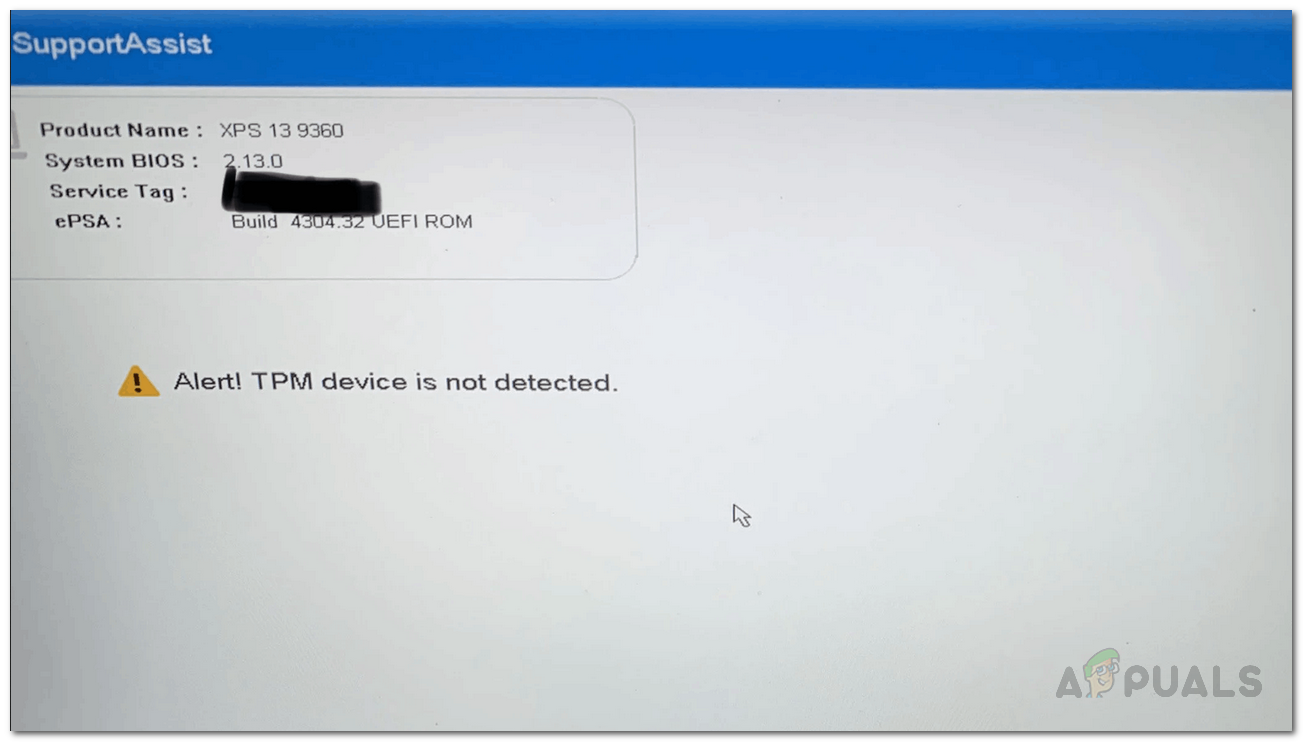
As it turns out, when you stumble upon the error in question, if you are using any BitLocker functionalities offered by Windows to encrypt a partition on your system, it won’t work. This is because of the fact that BitLocker makes use of the TPM chip on your board to encrypt and decrypt the data you want it to. A simple fix users usually think of when they face this issue is to simply disable TPM from their BIOS settings. However, that won’t work because the TPM option disappears from the BIOS menu and so you won’t be able to turn it off. Plus, if you are using BitLocker on your system, you wouldn’t want to disable it in the first place.
So what’s essentially causing this issue? The most apparent reason would be your BIOS firmware, of course. If you have recently updated your BIOS firmware, or even in some cases, if you haven’t updated it, it can cause the issue. It goes both ways and thus, you will have to look at both sides of the coin to get the issue resolved. With that said, let us get into the different workarounds that you can make use of to completely get rid of the error in question.
Disconnect Laptop’s Battery
The first thing that you should try out after facing the “TPM device is not detected” error message is to remove the battery from your laptop. This has been reported by several users who were facing the similar issue and disconnecting the laptop’s battery has reportedly solved the issue for them. When you remove the battery from your laptop, the board will reset and you will have a fresh start upon plugging it back in.
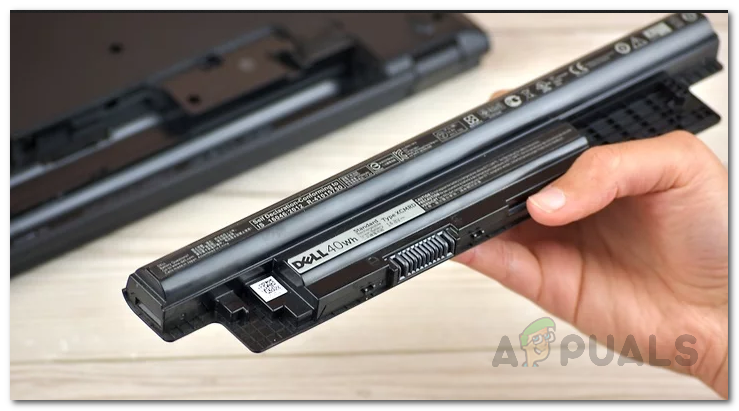
To do this, simply disconnect the battery from your laptop and then let it sit for a few seconds. After a couple of seconds, plug the battery back and boot up your laptop to see if the issue persists.
Update Firmware
If reconnecting your laptop’s battery does not fix the issue for you, there is a good chance that the issue is being caused by your laptop’s firmware. This can usually happen when you haven’t updated your BIOS firmware for quite a while. If you are already running the latest firmware version, you may skip this and jump to the next solution. In such a scenario, you will have to look up for any firmware updates for your model, download them and then get it installed. To do this, follow the instructions down below:
- First of all, head to the official website for Dell’s Drivers and Downloads by clicking here.
- Once there, you have one of two options. You can either use the Dell SupportAssist utility to auto-detect any outdated drivers on your system and have them installed. To do this, simply click on the Download & Install SupportAssist option and then follow the on-screen prompts.
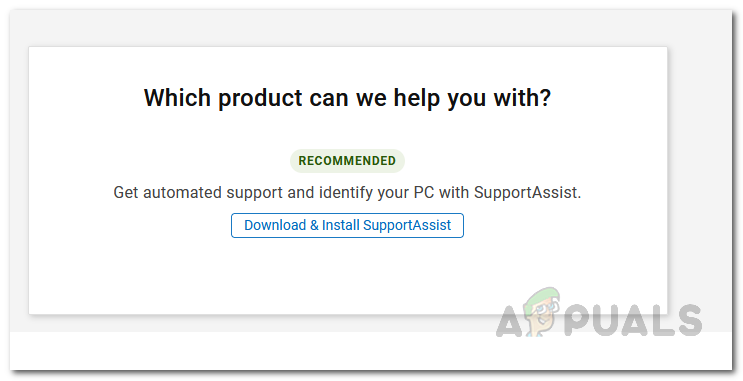
- Alternatively, if you have your laptop’s model or product ID and just wish to update the firmware, you can manually search for it and then download the latest version available. To do this, enter your device’s model or product ID in the search field provided and hit Enter.
- On the next page, click on the Find drivers option in front of Manually find a specific driver text.
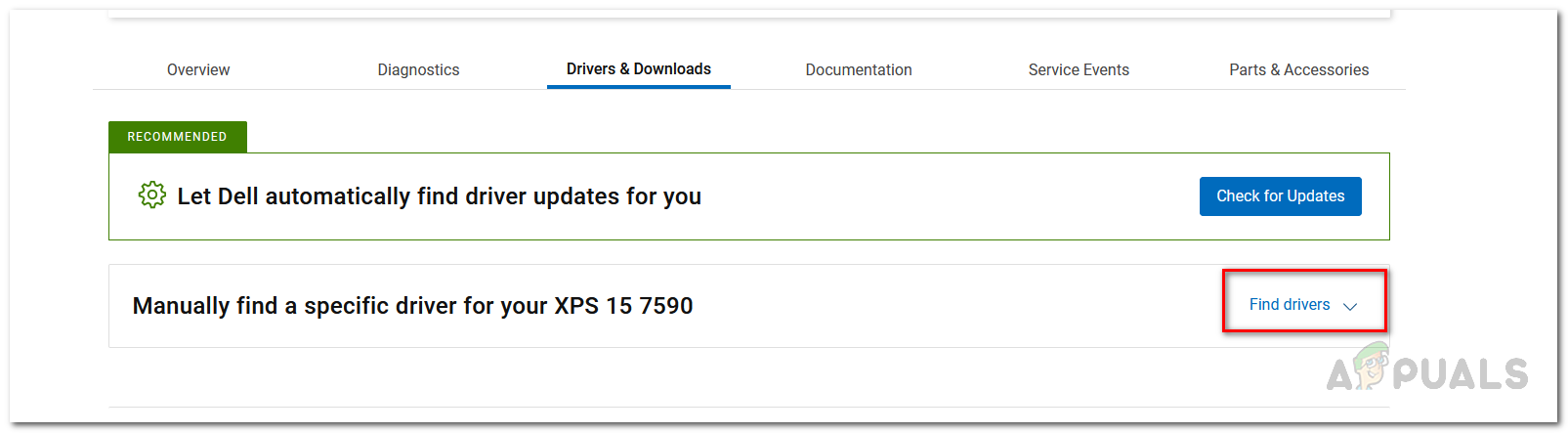
- Choose your appropriate operating system and look for any firmware updates. Download the driver and then follow the on-screen prompts to finish installing the update.
- Once you are done, reboot your system to see if the issue has been patched.
Reset BIOS Defaults
As it turns out, for some users the issue was caused after they performed a firmware update on their respective system. If you stumbled upon the error message after getting a firmware update, then it could be that the update might not have been fully compatible for you. This can happen when you use the auto-detect utility from Dell that updates all of your drivers. In such a case, you will have to reset your BIOS to its original settings to get rid of the issue in question. To do this, follow the instructions down below:
- First of all, make sure that your laptop is powered off. Also, make sure that your laptop is plugged in. If it is, go ahead and unplug it.
- After that, hold down the ESC and CTRL keys. While holding both of these keys down, plug in the power cable and hit the power button on your laptop.
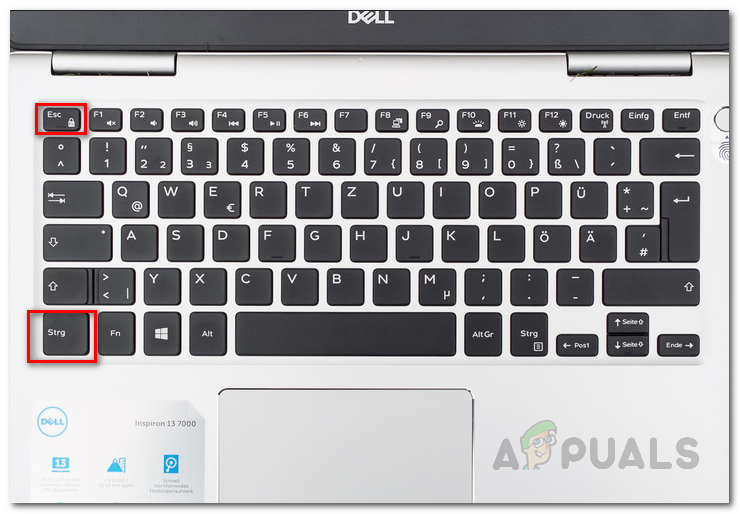
- Once the laptop starts to boot up, you can release the ESC and CTRL keys.
- You will be taken to a BIOS page. Here, choose the Roll Back BIOS option to go back to the defaults.
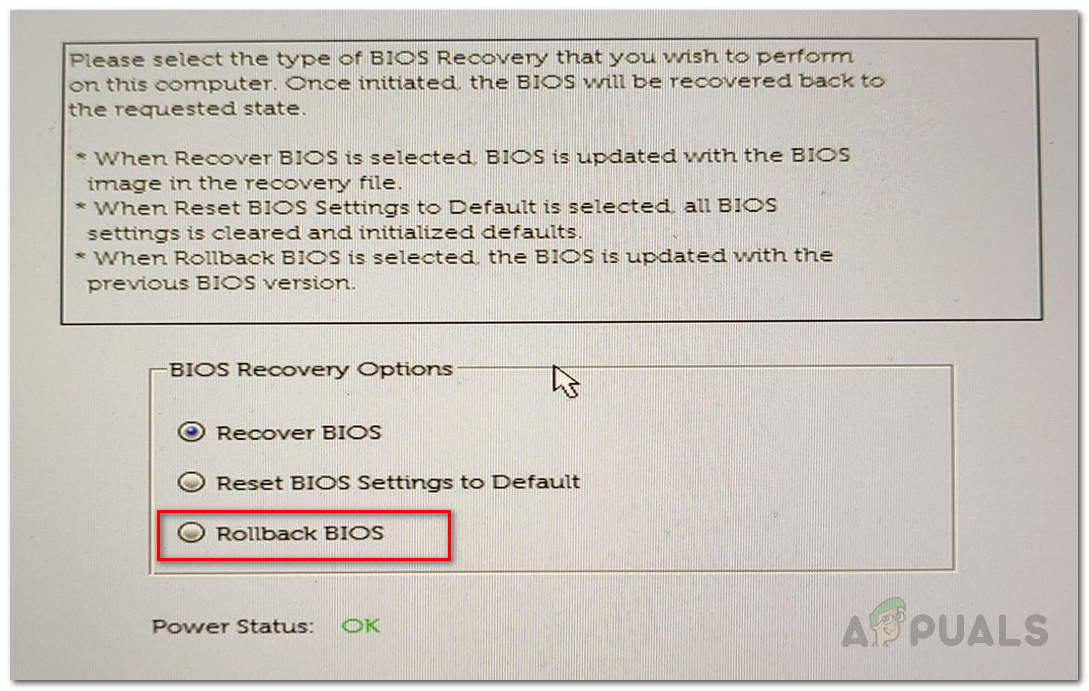
- Once you have done all that, wait for your system to reboot. At this point, Windows should be able to recognize your TPM chip and you should be good to go.
TPM Option Is Missing in the System BIOS Setup Latitude, Precision, or XPS
The Trusted Platform Module (TPM) option may be missing in the system BIOS setup or Windows Operating System on your Dell Latitude, Dell Precision, or XPS system. Follow the steps outlined in this article to resolve this issue.
Summary: The Trusted Platform Module (TPM) option may be missing in the system BIOS setup or Windows Operating System on your Dell Latitude, Dell Precision, or XPS system. Follow the steps outlined in this article to resolve this issue. . View More View Less
- Article Content
- Article Properties
- Rate This Article
This article may have been automatically translated. If you have any feedback regarding its quality, please let us know using the form at the bottom of this page.
Article Content
Symptoms
You may encounter a situation where the Trusted Platform Module (TPM) 2.0 option is missing from the BIOS setup screen, the Security option, or that there is no TPM present when running the Trusted Platform Module Microsoft management console (TPM.msc) in Windows.
This issue may become apparent as the result of a BitLocker recovery message.
NOTE: This only applies to platforms that support or can be switched to TPM 2.0. (Skylake and Newer systems.)
On computers with encrypted hard drives installed, you may also experience a no-boot situation if the TPM option is missing. Check the BIOS settings to ensure that TPM is not missing. Also, follow the steps below to resolve the missing TPM issue if a no-boot occurs on an encrypted hard drive.
Cause
No cause information.
Resolution
NOTE: Dell Technologies recommends that the entire installation bases of applicable systems are updated, not just systems that are presenting issues with TPM.
If you are using UEFI boot mode, it is recommended to download and install the latest TPM 2.0 firmware version from the Dell Support Website on your applicable systems. The firmware is located under the Security category in the list of drivers. This new TPM 2.0 firmware should prevent this issue from occurring in the future.
If using Legacy boot mode, download and install the latest TPM 1.2 firmware version from the Dell Drivers & Download website on your applicable systems. The firmware is located under the Security category in the list of drivers.
NOTE: Please see our article on: How to Successfully Update the TPM Firmware on your Dell Computer
NOTE: Search for drivers on the Dell Support Website by system model, not the service tag, as depending on the service tag entitlement, the TPM firmware files may not be displayed.
If TPM is not present, try the following troubleshooting steps:
- Update the system BIOS to the latest version available on the Dell Drivers & Downloads website.
- Power off the computer, then disconnect the AC power cable and leave the computer unplugged for about 30 seconds.
- Reconnect AC power to the computer and boot to the BIOS setup using the F12 one-time boot menu.
NOTE: To ensure TPM is turned on, you must press F2 to enter System Setup. Then go to the Security section and check that TPM is set to On under the TPM security settings.
Additional Information
Recommended Articles
Here are some recommended articles related to this topic that might be of interest to you.
- How to Troubleshoot and Resolve Common Issues with Trusted Platform Module (TPM) and BitLocker
- Dell computers that can upgrade from TPM version 1.2 to 2.0
- How to enable the TPM (Trusted Platform Module)
- Trusted Platform Module (TPM) Frequently Asked Questions for Windows 11
- Resolving a TPM Error Seen During BitLocker Encryption on a Dell PC
- How to Configure the Trusted Platform Module (TPM) When It’s Greyed Out in BIOS on a Latitude 7350
- Cannot Enable Trusted Platform Module (TPM) as option is greyed out in BIOS
- How to update the TPM firmware when you get the error message «The update image is not for this system»
- Intel Platform Trust Technology(PTT)
- Activating the Trusted Platform Module Security Feature
- How to Successfully Update the TPM Firmware on your Dell Computer
- Using scripting or automation for TPM firmware updates from Dell
- Updating the BIOS on Dell Systems With BitLocker Enabled